Saturday, March 5, 2022

Day 4: May God die in all of us one day


“Where is God? Where is He?” someone behind me asked. ..

For more than half an hour [the child in the noose] stayed there, struggling between life and death, dying in slow agony under our eyes. And we had to look him full in the face. He was still alive when I passed in front of him. His tongue was still red, his eyes were not yet glazed.

Behind me, I heard the same man asking:

“Where is God now?”

And I heard a voice within me answer him:

“Where is He? Here He is—He is hanging here on this gallows. . .”  

Elie Wiesel (recounting the day he was forced to witness a boy hanging at the gallows in a Nazi concentration camp. 


Pete talked about the AFL journey starting in the foothills and moving to the mountains.  I think today, we moved to the mountains.

I wish I could have cried again, but today was not the first time I heard this story.  Today was not the first time the horrors of my ancestral homeland raced through my brain.  I am not a stranger to the stories of WW2.  I grew up around three German Canadians, my Opa, my Oma and my Dad,  who had their own horror stories of the war.  Those were a different kind of horror.   But their stories didn't matter.  They were seen as the enemy even through they were abhorrent to regime in power that caused so much destruction and tyranny to their neighbours and their home.    

I remember my Dad telling me there were things he couldn't tell me as long as a certain member of his family was alive.  After that man died, I was finally told that he was one of the soldiers that worked in the concentration camps.  I had never met my great uncle, but his presence and identity weighed heavily on me in my growing up years. 

When my family got to Germany in 1937, it was my great uncle that told my Opa "Why did you come here?".  It almost seemed like he had hoped to spare my Opa the hell he was going to experience himself.  And what kind of hell was it for him?  I realized later that the only reason my Opa didn't wind up in the SS like my great uncle did, was because he had gone to Canada with a Polish passport because he worked on a farm in Poland during his youth.  When he got to Germany they were going to war in Poland, so his passport was taken away and he was sent to Norway to guard airplanes.  Something about a conflict of interest.  

My Opa was spared from a decision that would be his death (he and his family would most likely have been killed if he refused to sign up with the SS) and spared from being that person that everyone would hate for his involvement.  Who spared him?  God?  I won't believe that anymore... he was spared because of a passport... nothing greater or less.  

As I listened to the music that came after the reflection by Elie Wiesel, I wrote something. I'm a poet...  It was all that came out of my soul in that moment. 

And God is dead again.  How many times does God die?  At the hand of that which God gave life... God dies. 

And will there ever be an end to God dying?  May God die in all of us one day. 


Friday, March 4, 2022

Day 3 The Gift from Prometheus


"Yes, you heard me right.  I propose the serious and sustained reading of Marx, Nietzsche and Freud as a Lenten penance."  

"You've got to be kidding, That's positively outrageous.."

"Perhaps it is.  But I'm on kidding.  I'm quite serious."

"But you've named three of the most militant atheists of modern times, three founding fathers of secular humanism."

"I know, though I like to think of them as great modern theologians of original sin.  In any case, it is precisely their critique of religion that I recommend for Lenten reflection, more specifically their critique of the Christianity of the Christendom in which they lived as unbelievers."  ...

Perhaps we need to see Marx, Nietzsche and Freud, along with Luther and Barth, as expressing a Promethean protest against all the Zeuses of instrumental religion, the piety that reduces God to a means or instrument for achieving our own human purposes with professedly divine power and sanctification. 

Merold Westphal

I think grade school introduced me to more about the Divine than church, Sunday School and even Bible School combined.   These establishments only tried to reinforce in me what my parents brought to the table.  

I can imagine them saying maybe not so much in words... 

"This is how we see God... so this is all we have to pass along to you. All we can give you is what we embrace ourselves."  

It was in Grade School that I was introduced to the way the Greeks looked at the Divine.  It was in Grade 5 when I learned about characters like Zeus and Prometheus. Those stories captivated me so well that they are still residual in my memories as much as the stories of Jonah, Moses and Abraham.  

No one in the bible introduced me to the reason for fire, but the Greeks had a story.  

Prometheus was the God of Fire.   The story has it that Zeus, the King of the Gods hid fire from the mortals.  Prometheus stole fire from Olympus and brought it to the Earth.  This angered Zeus and he inflicted severe punishments on the Earth and on Prometheus as a result.   As an eleven years old, I can still remember the picture I had in my head of a figure of a man, but was identified as a god was tied to a rock where a scavenger bird came every day and ate from his insides.  I looked up the story to refresh my memory and it was his liver that an eagle ate.  It was replenished every day so the eagle could torment Prometheus again the next day with the same torture. This went on for thirty thousand years. (Ouch!)   

That picture didn't leave my mind.  I wondered what Prometheus had to gain to bring fire to the humans.  Was it some kind of rare compassion, because the gods weren't big on compassion for humans.  That was obvious in the stories I read.  Whatever the reason, he did it and he suffered.  

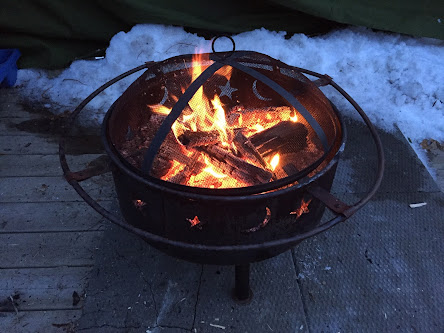
Today, I am grateful for fire.  It keeps my house warm in the cold winters.  Fire also gives me peaceful pleasure when I sit by the camp fire on the deck and watch the flames dance.  I take for granted that this is a gift that might have cost somebody something. In the bible stories... fire just was.  But in the story of Prometheus, I was given a character that sacrificed himself for my comfort and enjoyment.  That is why I don't forget that story. 

My infatuation with Greek Mythology carried on to my teen years when with an animated Hercules (or Heracles in the Greek) and then in my early adult years when Kevin Sorbo brought the character to life in "Hercules, the Legendary Journeys" .  I again found myself enamoured by a son of Zeus who put humans ahead of the gods that tormented them.  

"Salieri presents us with a vivid picture of the piety that reduces God to a means to the believer's own ends.  Freud, Marx, and Nietzsche find this sort of piety to be the rule rather than the exception.  Behind what professes to be love of God and neighbour, they regularly find love of self, disguised beyond recognition, at least to those who perpetrate this pious fraud.  To see our three atheists as critics of instrumental religion could be to make them instruments for self-examination and sanctification.  Reading them at any time of the year could be a Lenten spiritual exercise that could lead to godly sorrow and repentance 'that leads to salvation and brings no regret.'" Merold Westphal

I think of all the people who have sacrificed and endured wrath from "the gods"  because they were bringing fire to humanity.  

I find myself a grateful recipient of a different kind of fire now.  The fire of wisdom, the fire of knowledge, the fire of freedom from religious conformity, the fire of critical thinking, the fire of doubt in the presented portrait of the divine.  And in sitting by that fire, I am not lost or wasted upon.  I am warmed and enriched.  

Thank you to all the "Prometheuses" out there.


Thursday, March 3, 2022

Day 2: Just longing for a place to fly


"Theology is idolatry if it means what we say about God instead of letting ourselves be addressed by what God has to say to us (iconic). Faith is idolatrous if it is rigidly self certain but not if it is softened in the waters of "doubt." (John Caputo - What would Jesus deconstruct?)


"These spaces are like deserts in the oasis of our lives. Quiet places nestled in the midst of our everyday life, where we can experience some kind of deeper kinship with others.


Hopefully we all have these kinds of spaces somewhere in our lives, whether it's at our monthly poker game, weekly coffee morning, online discussion group etc. They can be places where we can be free to drop our defences, engage with others and experience briefly a type of connection with others that crosses boundaries.


Perhaps a question to ask yourself today involves reflecting on whether you have that type of space in your life and/or how you might cultivate one."  Peter Rollins


At 2:00 am, I got out from bed and went into my office where my computer lay dormant, waiting for me to open it up and find my daily AFL readings.  I read of a place.  A pub, called "Time in a Bottle"...


"In a secret bar within the city where magic is used to keep the peace, heroes and villains gather to enjoy a pint and talk about their days. " (Knight and Squire Amazon review) 


What would I say if I found myself in that place?  What thoughts would pour out of my head that I keep bottled up?  Maybe my blogs are my "Time in a Bottle", my magical place where I can talk about my day and I can imagine that no one takes issue with what I am saying.  I am unknown for the most part.  What I say here flies under most radars as not to many of my friends and family want to go the extra mile with me and dive into my deep and darker thoughts.  So I write and become as daring as those heroes and villains in the pub.  


But what happens when the magical barriers that prevent fighting are dropped and a building full of heroes and villains confront each other all at once? " (Knight and Squire Amazon review)


What happens when someone I love opens up their computer and reads the words I have penned in my space?  Does the magic end?  Will I be condemned instead of being loved?  Is their love really that conditional and incapable of embracing me in my rawness?  


In all honesty, I do what I can to make my words available, and yet I still feel hidden.  I once invited someone into this magical world of mine... and they told me they would rather not read what I have written, but preferred to get to know me outside of this "Time in a Bottle".  The only problem is... outside, the magic is gone and I fall prey to pleasing people and hiding what I fear will make them not love me.  


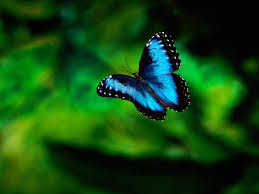
So far... only two friends have let me know that they know that I am journeying through Lent as an Atheist.  I still believe these forty days can transform me.  But at what cost?  Is the "Time in a Bottle" the only place that I can witness that transformation?  Does this butterfly have to become a caterpillar again?  


Wednesday, March 2, 2022

Day 1: The Dance of the Dark and the Light.


Into the Cloud of the Unknowing

"This week marks the beginning of your dialectic journey. There is a mix of music, readings, writings and video, all designed to help you prepare for this long and often difficult adventure. There is some particularly emotional material this week, material designed to help us feel something of the heartbeat out of which the critique of theology arises." PR

It seems that most of my inspiration, lately, comes from my time in the hot tub.  Last night, as I ceremoniously said good bye to "God",  I noticed that there was a very grey sky.  No poofy clouds as such... just one big cloud cover of dismal grey.  There I was, awaiting some sort of symbolic entrance into the "Dark Night of the Soul" and not even a dark night was there.  Just some smokey like substance I couldn't even participate in.  

Then I had a thought.  When the darkness is there, when the blackness is visible from my earthly vantage point... No clouds, no smoke screen... just the vastness of space... I see light.  I seen the stars or the moon.  The darkness in its purest form invites me back to light, and yet still lets me rest in the shadows of the night.  How beautiful is that.  

So I am not scared of the night.  It is just this dusty cloud that separates me from the darkness that I am longing for.  For then I can participate in the dance between the dark and the light.  For that only happens in the truly dark night.  

In the introduction today, Peter Rollins talked about the foothills before the mountains.  This journey we are on in Atheism for Lent starts a winding through the foothills.  The climbing isn't as treacherous and the view is something beautiful, but as the journey continues on... the climbing is more intense, but the beauty of the mountains is something to take in and behold in its awesomeness.  That view on this journey is what I am looking for.    It is that dance with darkness and light.